

What prospects for humanitarian action?

On April 15, a long-simmering conflict erupted in Sudan, engulfing a large part of the country, with the capital Khartoum and the Darfur region at its epicenter. This “war of the generals”, as it has come to be known, pits General Mohamed Hamdan Dagalo, known as “Hemedti”, head of the paramilitary Rapid Support Forces (RSF) militia, against General Abdel Fattah al-Burhane, commander of the Sudanese Armed Forces, is both an expression of the failure of the country’s democratic transition, and the cause of an acute humanitarian crisis in a country already fragile and impacted by previous hostilities, both within and across its borders.
Failure of the democratic transition
In April 2019, former dictator Omar El-béchir was deposed by the army under popular pressure. Among other things, in the early 2000s, he had inflamed the Sahelian region of Darfur, in western Sudan, by stirring up rivalry between the region’s Arab tribes and African populations, who were rebelling against the confiscation by the government and Arab tribes of the area’s resources (water, land, subsoil riches, etc.). Omar El-béchir armed the sinister “Janjawids”, Arab militiamen who carried out massacres and “cleansed” villages of African communities. One of the Janjawids’ leaders, who quickly climbed the hierarchy thanks to the violence in Darfur, was Mohamed Hamdan Dagalo-Hemedti, a former camel trader. Omar El-béchir then encouraged the transformation of the Janjaweed into a “Rapid Support Force” under the command of Mohamed Hamdan Dagalo, tasked with protecting his power. On the fall of Omar El-béchir, an interim unity government was set up, headed by Prime Minister Abdallah Hamdok, but in October 2021, the military regained power, accepting the principle of a transfer to civilian authorities in 2023, and set up a Transitional Sovereignty Council, co-led by General Abdel Fattah al-Burhan and General Mohamed Hamdan Dogolo, who were respectively Chairman and Vice-Chairman. Between the two generals, a rivalry for power and a dispute over the modalities of integrating the RSF into the army continued to grow. Conflict finally broke out in April 2023, ruining hopes of establishing democracy in Sudan. Westerners, faced with the violence of the fighting, particularly in Khartoum, urgently evacuated their nationals. France, for example, launched Operation Sagittaire on April 22, evacuating over 900 people of almost 80 nationalities.
Acute humanitarian crisis
First of all, according to the UN Office for the Coordination of Humanitarian Affairs (OCHA), the major figures for population displacements caused by this conflict: almost 2.5 million people have had to flee since April 15, including almost 2 million internally displaced persons, and more than 500,000 have crossed the borders of neighboring countries (in order of importance, first Egypt, then Chad, South Sudan and the Central African Republic). According to the IOM (International Organization for Migration), 72% of those who have had to move are from the state of Khartoum, and 19% from the state of West Darfur; again according to the IOM, over 90% of the refugees are women and children. Some countries, such as Egypt, are beginning to close their borders to refugees from Sudan… OCHA estimates that 24.7 million people in Sudan are in need of humanitarian assistance, including 11.7 million in food crisis (IPC 3+).

Talks held in Jeddah, Saudi Arabia, last May led to a declaration of commitment on May 11, designed to enable the establishment of corridors for the evacuation of civilians and the delivery of humanitarian aid. However, the successive ceasefires signed have not been respected (or have been too short), preventing in practice the implementation of this declaration of commitment. The RSF decided on May 31 to withdraw from the Jeddah talks, and on June 2, noting the impasse, Saudi Arabia and the United States announced the suspension of the talks. The talks have now been relaunched, announced Saudi Arabia. The United Nations CERF (Central Emergency Relief Fund) has decided on an additional $22 million, and the Sudan Humanitarian Fund managed by OCHA has allocated $40 million for emergency humanitarian programs.
In addition to the continuing fighting, there has been widespread looting, particularly of humanitarian NGO premises (such as that of Première Urgence Internationale-PUI) in Khartoum. UN World Food Program (WFP) warehouses have also been looted. The NGO PUI has gathered testimonies from displaced people describing the looting in Khartoum (where entire neighborhoods no longer have water or electricity): militiamen and various unidentified armed groups enter people’s homes to take everything with pick-ups all over the city. They start with gold, then move on to televisions, refrigerators, anything of value… These displaced people have also reported numerous cases of rape and sexual abuse to PUI teams.

A country split in two?
Militarily speaking, the map of the situation shows a country divided between a “government-Abdel Fattah al-Burhane” zone covering the West, the North and part of the South, while the RSF control part of the center with an advance towards Khartoum that remains the object of fighting, and above all the South-West, West Darfur, parts of which, however, notably on the approaches to Geneina, remain disputed. The authorities have withdrawn to Port Sudan, on the Red Sea coast, as have government departments such as the Sudanese Federal Commission for Humanitarian Aid (HAC), which oversees the issuing of entry visas to humanitarian aid workers… As we shall see later, these visas are one of the issues at stake in the access of humanitarian aid workers to the country, as they seem to be withheld by the authorities responsible for issuing them. In this respect, we may well wonder whether, from a humanitarian point of view, we are not also heading towards a country divided in two, with, rather like Syria, a “governmental” zone closed to access or at least extremely controlled for humanitarian actors, and an “autonomous” west-central zone, with the prospect of humanitarian organizations entering through Chad, allowing them to operate more freely via a cross-border corridor.
The Gedaref zone in the east
According to the association SOLIDARITES INTERNATIONAL, which has an operational base in Gedaref (Al Qadarif state) where it caters in particular for the needs of refugees from Ethiopia, the “climate” there is tense but without fighting; almost 4,550 displaced households had arrived in the area by early June, some of these families coming from the Sudanese state of Al Jazirah, where they were already displaced from Khartoum. The SOLIDARITES INTERNATIONAL team is currently engaged in emergency needs assessments in the area.

The case of Darfur
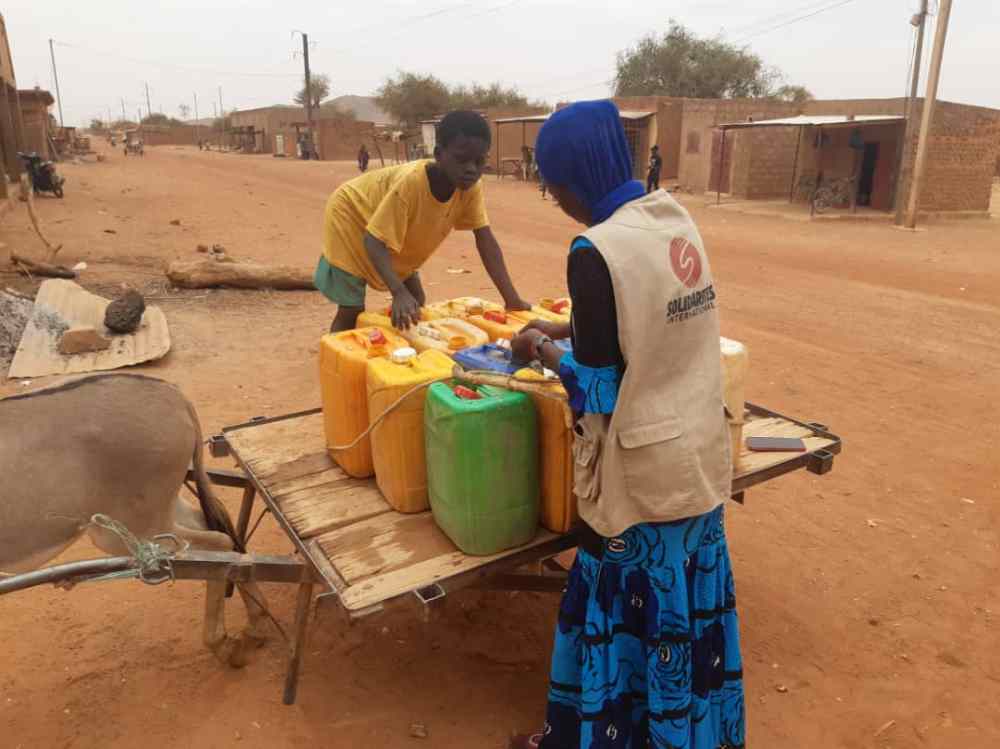
The generals’ war has rekindled pre-existing violence in Darfur (largely unconnected with the ongoing conflict between the two generals), dating back to the time of Omar El-béchir, notably between Arab and “African” Massalit tribes (so much so that many on the ground believe that the scenario for the return of the “Darfur war” of the early 2000s has been written). Despite the fighting, humanitarian organizations operating in the region have been able to maintain a minimum level of information-gathering on the situation. This is the case of SOLIDARITES INTERNATIONAL, which has an operational base in Geneina, Darfur. For the time being, given the extremely deteriorated security situation, the implementation of SI’s programs has been suspended, but in June its teams reported a catastrophic state of affairs: in Geineina, RSF reinforcements had been sent in, and violent fighting broke out as soon as the camps were resupplied with arms and ammunition, particularly in the El Jamarek, Al Jabal and Ardamatta districts. On June 14, the governor of West Darfur was killed. The bodies of those killed are no longer removed from the streets, creating the risk of epidemics spreading. Part of the town has been destroyed, and both IDP sites and the homes of host populations are being destroyed and looted (IDP sites have been set on fire, along with the water pumps they contained). Communications, networks and electricity have been cut off. The humanitarian situation is described by SOLIDARITES INTERNATIONAL field teams as critical: people have to queue up to nine hours for a bucket of unsanitary water (there has been no water since April 15), health services have been destroyed (the wounded are not treated and die in the street), food resources have been exhausted… On average, ten children die every day in Geneina due to lack of access to drinking water and sanitation, food or health care… The ICRC warns of the dramatic state of affairs in terms of protection and access to water, hygiene and health care. For PUI, “West Darfur was already the epicenter of a major humanitarian crisis before the conflict”, and “its populations have had to cope with repeated displacements in recent years and are in a situation of extreme vulnerability”. Despite the fact that it is virtually impossible to intervene to the extent required at the moment, the SOLIDARITES INTERNATIONAL team managed to distribute its stock of basic necessities before the looting began, and to find a truck in which to place barrels of drinking water for emergency distribution to the population; it was also able to carry out the emergency rehabilitation of hand pumps. The NGO PUI, for example, is preparing to intervene in health and nutrition, as soon as the security situation permits.

Inhabitants of Geneina who try to make the journey to Adré in Chad to take refuge there lose everything on the road (racketeering, etc…). In the village of Adikong (where there has been violent fighting), witnesses report that many children and elderly people have been abandoned because they are too weak to reach the border. The hospital in Adré, Chad, supported by MSF, has received more than 800 wounded. Also in Chad, the NGO PUI has been operational since the start of the crisis, deploying mobile clinics in response to the needs of refugees from Darfur. Lastly, SOLIDARITES INTERNATIONAL’s emergency team in Adré, Chad, has begun to respond to the needs of displaced people and those leaving the hospital (water bladders, shelter kits).
Fighting is also affecting other towns in Darfur, such as Nyala and Zalingei, while others such as El Fasher (North Darfur) are seeing large numbers of displaced people arrive.
Further east, El Obeid (capital of North Kordofan), which used to serve as an “airlock” between Khartoum and Darfur, has been the target of fierce fighting and air and artillery attacks.
In these conditions, the responsiveness of NGOs is crucial: for example, on May 3, PUI deployed a mobile medical team to Hassa Hissa, two hours south of Khartoum, offering medical consultations, psycho-social support sessions, malnutrition screening and maternal health consultations.

The risk of widening conflict in Sudan
With the clash between the RSF and government forces, and the resurgence of conflict in Darfur, the oil-rich state of South Kordofan, bordering South Sudan, is once again under fire. The Sudanese army is accusing the SPLM-N (Sudan People’s Liberation Movement – North) rebel group of breaking a long-established ceasefire and attacking army positions in the state capital, Kadugli, which residents have begun to flee…
Challenges and constraints to humanitarian action in response to the current crisis :
These are numerous, and can be broken down into two types:
Practical and natural constraints:
Firstly, the arrival of the rainy season at the end of June makes travel extremely difficult (even if it is eagerly awaited by populations who have run out of water…). For the teams on the ground or waiting to cross the border, it’s a race against time to reach the areas of intervention, with the personnel and humanitarian supplies they need. This constraint is obviously linked to administrative constraints (see below).
The impact of the rainy season is also decisive in terms of the ability of humanitarian organizations to provide assistance to the 100,000 or so Sudanese who have sought refuge in Chad since the start of the crisis. As Audrey van der Schoot, Head of Mission for Médecins Sans Frontières (MSF) in Chad, points out, flooding could isolate refugee and host populations, particularly in the border region of Sila, cutting them off from aid.
Finally, NGOs such as SOLIDARITES INTERNATIONAL and PUI point out that the rainy season will worsen the situation in refugee camps and heavily populated centers, with high risks of the spread of diseases linked to unsanitary water, such as malaria and cholera.
The lack of fuel also poses a challenge to the future movements of humanitarian organizations, as does the absence/destruction of communication networks (Internet), particularly in Darfur, and finally banking networks (banks were burnt down in Geneina in Darfur, for example) enabling funds to be transferred (team salaries, possible cash distributions to beneficiaries).

- Constraints of an administrative nature and/or flexibility in implementing operations contracts with donors.To quote the NGO PUI: “Access is a huge problem, starting with visas”… The most urgent constraint to overcome is that of obtaining or renewing visas for the emergency teams of humanitarian organizations, especially from Port-Sudan, as well as the transport of equipment and humanitarian products from emergency stocks, it being understood that these cannot be transported without the NGOs’ emergency staff being on site to receive and clear them through customs, which implies that they have been able to enter the country with visas. The NGOs SOLIDARITES INTERNATIONAL and PUI report that, for the time being, it is almost impossible to obtain visas for their staff, as access is only allowed to people with current residence permits (obtained before the start of the crisis). Also according to PUI, in the east of the country, even inter-state travel requires permits, which are often refused or delayed for weeks at a time. The WHO and ICRC have managed to bring in medicines from Port Sudan, but other organizations have been denied access from Ethiopia.The United Nations (WFP and UNHAS) have set up air links and freight services from Nairobi in Kenya to Port Sudan, and ECHO (“ECHO Flight”) to eastern Sudan via Chad. On the Chad border, a humanitarian corridor seems to be in place, with UN support, from Abéché and Adré in Chad. The humanitarian association SOLIDARITES INTERNATIONAL has taken over the management of the “NGO Forum for Darfur” which, in coordination with a UN evaluation mission, is in charge of the feasibility of this Abéché-Adré-Geneina corridor. SOLIDARITES INTERNATIONAL is in constant contact with all parties involved in the conflict and the authorities in order to guarantee the feasibility of this corridor. The Chadian authorities have given permission for humanitarians to cross the border in both directions, and representatives of the Sudanese HAC in Darfur seem to be showing openness.The obligation imposed by the Sudanese authorities on humanitarian organizations to travel and operate under armed escort will pose a problem for NGOs refusing to operate under the protection of such escorts: difficult negotiations with the authorities, and security management enabling humanitarian aid to be delivered without taking unacceptable risks, in a high-risk context.Lastly, the acute and evolving emergency nature of the current crisis in Sudan (PUI describes it as “a crisis of unprecedented scale, with the whole of Sudan in advanced humanitarian crisis, and the Sudanese people desperate”) calls, on the one hand, for an increase in funding in response to it from humanitarian aid donors, and, on the other hand, a form of “implementation flexibility” on the part of these donors, to enable the rapid deployment of emergency teams in line with needs, and above all the adaptability of the humanitarian response (in terms of type of response, areas of operation and number of beneficiaries) to a constantly evolving situation. It would appear that some donors (CDCS, ECHO) have demonstrated a degree of speed and flexibility in this respect.

Provisional conclusion
The generals’ war in Sudan dramatically illustrates the central issue of humanitarian organizations’ access to regions and populations where needs are most acute, and the consubstantial question of “how far to go” in terms of risk-taking and choices in terms of protection – or not – to operate freely and in accordance with our fundamental principles of neutrality, independence and impartiality, among people impacted by armed conflict. Like other crises (DRC, Ukraine…), it also raises the question of the need for flexibility on the part of donors, in order to adapt responses to changing contexts. It is to be feared that, in the near future, these issues of humanitarian aid in war zones will become increasingly important.
Pierre Brunet
 Writer and humanitarian
Pierre Brunet is a novelist and Vice-President of the NGO SOLIDARITES INTERNATIONAL. He became involved in humanitarian work in Rwanda in 1994, then in Bosnia in 1995, and has since returned to the field (Afghanistan in 2003, Calais Jungle in 2016, migrant camps in Greece and Macedonia in 2016, Iraq and North-East Syria in 2019). Pierre Brunet’s novels are published by Calmann-Lévy: “Barnum” in 2006, “JAB” in 2008, “Fenicia” in 2014 and “Le triangle d’incertitude” in 2017. A former journalist, Pierre Brunet regularly publishes analytical articles, opinion pieces and columns.




You must be logged in to post a comment.