

Interview with Xavier Boutin and Thierry Mauricet, CHD co-presidents

Alain Boinet: Coordination Humanitaire et Développement (CHD) is organizing an event on September 21 in Paris to celebrate its 40 years of commitment to solidarity. What is this event all about, and how can you get involved?
Xavier Boutin and Thierry Mauricet: Coordination Humanitaire et Développement (CHD) is celebrating 40 years of commitment to solidarity at an event reserved for its members and closest partners in Paris on September 21.
Coordination Humanitaire et Développement (CHD), formerly known as Coordination d’Agen, is celebrating four decades of humanitarian and development work. Founded in 1983 on the initiative of the Guilde, the organization’s primary aim was to bring together and encourage the coordination of all those involved in international solidarity. True to its mission from the outset, CHD now counts 55 non-governmental organizations among its members, a striking testimony to its success and reach.
CHD’s anniversary takes on a very special significance, symbolizing its journey marked by an unwavering commitment to solidarity. The event on September 21 will bring together all the member organizations, offering a framework conducive to exchanges, the sharing of experiences and mutual discovery, with the aim of fostering even more powerful synergies of action.
The event will take place at the Apprentis d’Auteuil, one of CHD’s member organizations, in an atmosphere conducive to exchange and reflection. The day will be divided into various interactive sequences, beginning with simultaneous workshops on CHD’s main working groups:
- Children’s Group: Participants will have the opportunity to discover tools and strategies based on children’s rights, in order to maximize the effectiveness and impact of projects in favor of the very young.
- HR Circle: In a playful spirit, Human Resources will be approached from the angle of a 7-family game. Participants will have the opportunity to exchange ideas and practice their skills in areas such as skills assessment, pedagogy and recruitment interview preparation.
- Ideas for tomorrow’s CHD: A session dedicated to the future prospects and challenges facing CHD. Discussions will cover CHD services tailored to members, strategic directions for the future, and innovative initiatives for sustainable impact.
- NGO Support Group: Participants will be immersed at the heart of NGO Support’s actions, and will have the opportunity to take part directly in their realization, thanks to an interactive course. This experience will test their practical knowledge of the essential support provided by NGO Support to international solidarity activities.

Following these enriching sessions, a major debate will be held on the theme of “Towards a more united future: NGO expertise on the front line to provide an adapted response to local needs”. Four speakers, operational players and eminent representatives of CHD member organizations, will bring their expertise to the debate table:
– Justine Muzik Piquemal, Regional Director for CAR, DRC, Sudan and Mozambique at Solidarités International.
– Anne PANEL, Director of Fert.
– Olivier ROUTEAU, Director of Operations at Première Urgence Internationale.
– Cédric TOUQUET, Head of Africa Programs at Acting for Life.
Topics covered during the debate will include the current contexts of humanitarian aid and development, the specific characteristics of interventions in the field, complementarity and partnership between organizations, as well as future prospects, avenues and solutions to meet the challenges ahead for CHD.
This debate will be moderated by Alain Boinet, founder of SOLIDARITÉS INTERNATIONAL, the online magazine www.defishumanitaires.com and former co-president (2013-2018) of CHD with Xavier Boutin. Alain La Roy, former French ambassador and former UN Under-Secretary-General in charge of peacekeeping and peacemaking operations, will summarize the proceedings.
The day will close with a cocktail reception and a convivial evening, conducive to exchanges and the strengthening of ties between representatives of member NGOs. It’s a unique opportunity to celebrate 40 years of solidarity, and to look forward to an ever more humanitarian future.
To take part in this exceptional event, invitations will be sent to member organizations of Coordination Humanitaire et Développement, as well as to relevant stakeholders. If you are interested in taking part in this event, please contact your CHD-affiliated organization or Alexia Tafanelli, Executive Secretary of Coordination Humanitaire et Développement, for more information on how to register and take part.
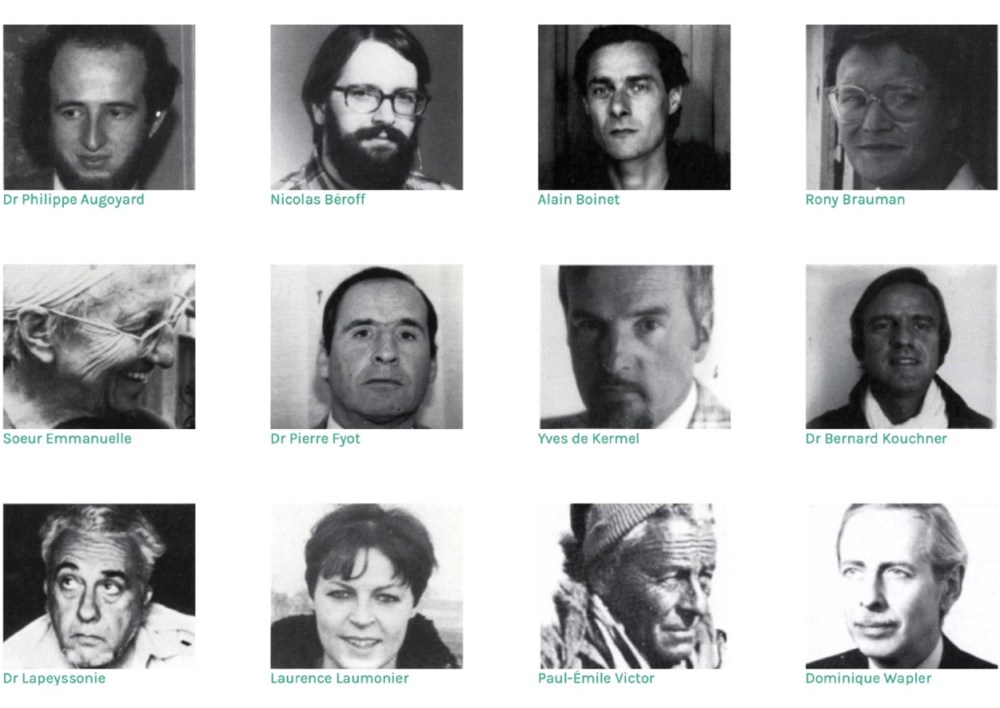
Question: Could you summarize for our readers the milestones in the history of CHD, whose 40th anniversary you will be celebrating on September 21 in Paris?
Answer: The first Agen Forum, launched by La Guilde in 1983, was an innovative event that brought together emergency and development players, marking the beginning of this initiative. At the same time, in the 80s and 90s, international solidarity in France experienced strong growth, with the birth of numerous committed associations such as Médecins sans Frontières, Action contre la Faim and CIDR through a desire for solidarity and commitment to humanitarian, social or environmental causes, and which played a crucial role in tackling humanitarian crises and natural disasters around the world.
In 2013, Coordination d’Agen changed its name to Coordination Humanitaire et Développement (CHD). This change better reflects the identity of its twenty or so members and their diversity of humanitarian and development actions. CHD is part of a dynamic of action, consultation and evolution, seeking to better face crises, strengthen the resilience of populations and influence public policies in France, as well as those of the European Commission and the UN.
CHD has contributed to a wide range of projects since its creation, and these various actions testify to its commitment to promoting effective, coordinated and well-considered international solidarity, while working to improve policies and practices in the humanitarian and development fields.
In partnership with CLONG, a joint secretariat between the two collectives, CHD is actively involved in the defense of International Volunteering. This approach aims to promote and support the actions of international volunteers and their essential contribution to humanitarian and development projects.
CHD is also involved in a number of studies on behalf of the sector. It carried out the first study on the reality of French public development aid. This initiative enabled us to gain a better understanding of the stakes and opportunities involved in the aid granted by France to support development projects abroad. Coordination SUD has continued this study on an annual basis. CHD also carried out a pioneering study on the salary practices of international solidarity non-governmental organizations in France in 2009. This study made it possible to evaluate and compare compensation policies within the humanitarian and development sector.
Finally, the creation and leadership of the Comité France Pays du Mékong: following a round table organized with public authorities, CHD played a key role in the creation and leadership of the Comité France Pays du Mékong. This platform brings together NGOs working in the region, promoting coordination and collaboration for targeted, effective projects.

The CHD is also part of the dynamic created by the report “Analyses et propositions sur l’action humanitaire dans les situations de crise et de post-crise” (“Analysis and proposals on humanitarian action in crisis and post-crisis situations”) produced by Alain Boinet and Benoit Miribel at the request of the French Minister of Foreign and European Affairs, Bernard Kouchner.
The report, which was submitted in March 2010, was scheduled for public presentation at the 1st National Humanitarian Conference in 2011. At this conference, it was announced that a French Humanitarian Strategy would be drawn up, and that a Humanitarian Consultation Group (HCG) would be set up with the main humanitarian NGOs in France. This report is the basis for the dynamic and organization of the partnership between public authorities and humanitarian actors. CHD supports this dynamic of action, consultation and evolution. To better cope with crises, to ensure the link between emergency-reconstruction-development-prevention in order to strengthen the resilience of populations, their capacity and ultimately their autonomy, to gain in efficiency and influence public policies.
En 2017, en parallèle, la CHD a mis en place un groupe de travail intitulé « accès humanitaire et systèmes bancaires », visant à aborder les problèmes liés au système bancaire français. Les ONG françaises dépendent principalement des financements des bailleurs institutionnels pour leurs actions humanitaires, mais elles se trouvent fréquemment confrontées à des crises dans des pays sous embargo ou sanctions financières de l’Union européenne et des États-Unis. De plus, depuis 2015, les banques françaises ont renforcé leurs règles de conformité à la suite de la condamnation de BNP Paribas aux États-Unis, ce qui rend difficile, voire impossible, le transfert de fonds vers ces pays.
En somme, ce groupe de travail initié par la CHD a joué un rôle essentiel en abordant ces défis et en favorisant une meilleure coopération avec les pouvoirs publics, notamment en lien avec les Directeurs du Centre De Crise et de Soutien (Patrice Paoli, Eric Chevallier et Stéphane Romatet). Il met en lumière les enjeux cruciaux liés au financement de l’aide humanitaire et vise à faciliter l’accès des ONG aux zones de crise où leur intervention est vitale. Ce groupe est désormais sous la responsabilité de Coordination SUD, fonctionnant sous le nom de « Copil EBO – Etat-Banques-ONG ».

Question: CHD is one of the six collectives that make up Coordination Sud. What are its specific features in the associative world?
Answer: Coordination Sud was founded in France in 1994, following the first international conference on sustainable development held in Rio de Janeiro in 1992. Faced with this international context, three coordinating bodies – CLONG Volontariat, Coordination d’Agen-CHD and CRID – took the initiative of joining forces to create Coordination Sud, a platform aimed at strengthening the collective action of French NGOs involved in international solidarity. Coordination Sud is committed to ensuring that the voice of NGOs is heard by political decision-makers at both national and international level. The organization advocates a common vision of international solidarity, promoting policies and actions aligned with the values of cooperation, social justice and respect for human rights.
Of the 55 member organizations of the CHD, 51 are members of Coordination Sud, which testifies to the willingness of these organizations to meet and exchange views on common issues. As a founding collective of Coordination SUD, CHD works according to the principle of subsidiarity, ensuring that actions undertaken by Coordination SUD do not overlap with those of CHD. As a pillar of Coordination SUD, CHD plays a key role in promoting the values of solidarity, cooperation and aid effectiveness. Its operational commitment, combined with its committed advocacy, makes CHD a key player in the fight for a more equitable and sustainable future for vulnerable populations worldwide.

Within this diversity of member sizes and approaches, CHD brings together NGOs old and new, small and large, with varied orientations, but all characterized by a pragmatic, operational approach to international solidarity.
At the heart of its dynamics, CHD strives to bring together, mobilize and promote the recognition of actors in the field, in order to influence the collective decisions taken by Coordination SUD, particularly in terms of advocacy with public decision-makers. CHD campaigns for public development aid to be channeled through NGOs, in line with the needs they face. Another major aspect of its advocacy is the promotion of NGOs’ right of initiative, an essential principle which consists in asserting their own vision and methods of intervention in the field, which are often sources of innovation.
CHD’s specificity lies in its operational nature, bringing together organizations involved in a wide range of humanitarian and development projects around the world. It encourages the coordination of its players throughout the entire process, from prevention to emergency, reconstruction and development, with the aim of optimizing the response to the essential needs of populations, in close collaboration with them, and with respect for their dignity and identity. In doing so, CHD is committed to the principles of neutrality, impartiality and independence, working with the populations concerned to find the most effective and sustainable way of meeting their needs.
Question: What are CHD’s activities and added value?
Answer: Among its 55 member organizations, CHD stands out for its commitment to promoting the complementary nature of its members’ actions. In fact, CHD is made up of 4 working groups that serve all its members by tackling cross-functional and operational themes. The main aim of these groups is to optimize organizations’ resources, strengthen their skills and capacity for innovation, and resolve issues of general interest. Organized around a defined work program and agenda, these groups collaborate on the publication of expert notes and documents, supported by the CHD Office.
Among the working groups set up by CHD, the “Groupe FIP Formation et Insertion professionnelle” has been dedicated since 2013 to improving training and access to employment in developing countries. Based on exchanges of experience and joint reflection, the 5 NGO members of this group have succeeded in improving their intervention methodologies, particularly with regard to entrepreneurship and new technologies applied to training and insertion.
Another exchange group, the “Groupe ONG Support”, aims to share best practices between support NGOs and to raise awareness among public funding bodies, other NGOs and the general public of the added value of these NGOs within the international solidarity sector.
CHD’s revitalized “Health Group” aims to improve the practices and actions of organizations involved in the health sector or in support of health structures, by adopting a coherent approach in the countries of intervention shared by the members.
The “Childhood Group”, created in 2014, and bringing together 20 NGOs committed to defending children’s rights internationally, aims to strengthen attention to children’s rights as a powerful lever for promoting equality, sustainable development goals and peace. Thanks to this group, tools such as the checklist for integrating children’s rights into field projects and practical information sheets have been developed, enabling the exchange of best practices and effective lobbying of institutions.
CHD also organizes geographic consultation meetings, highlighting issues raised by its members in specific areas such as the Ukraine, the Middle East and Southeast Asia. These meetings enable players in the field to exchange ideas, collaborate and find ways of working together in their humanitarian and development actions.
In 2022, CHD undertook a study of compensation and benefits, carried out by Deloitte. This study involved nearly 60 international solidarity organizations, and aims to enlighten NGOs on their current compensation practices, to help them set up effective compensation policies in line with their values and strategic objectives, while keeping a competitive watch on current trends and emerging practices. The employees targeted in this study are employees on permanent and fixed-term contracts, based in France or abroad, representing 8,557 employees, 61% of whom are executives and 39% non-executives.

CHD meeting on the humanitarian-development nexus with Jean-Bernard Veron of AFD and Alain Boinet.The conclusions of this study led to the establishment of an HR Circle in 2023, currently involving 35 organizations. To ensure the continuity of this approach, CHD offers personalized support to the organizations that took part in the study, as well as to those wishing to get involved in working sessions, capacity-building and the sharing of practices between international solidarity players. These exchange sessions are led by experts, and aim to respond to current human resources issues, such as identifying the skills needed for associations to function properly, strategies for recruiting, developing and rewarding talent, and other essential themes.
CHD’s operational commitment, combined with its ongoing efforts to strengthen cooperation and synergies between international solidarity players, make the collective an essential player in the fight for fairer, more sustainable development, serving vulnerable populations around the world.
Question: The world has changed a great deal since CHD was founded in 1983. How do you perceive today the realities and needs on the ground, the challenges and issues you face for populations and with national players in the various countries where CHD member associations are active?
Answer: In the midst of a world faced with complex conflicts, natural disasters and growing inequalities, it is likely that the next fifteen years will see a steady increase in both development and humanitarian needs, and NGOs will play an essential role in alleviating human suffering, promoting peace and development, and fostering human progress on a global scale.
Indeed, humanitarian and development needs and realities in the field are increasingly complex and multidimensional, and humanitarian and development issues are often closely intertwined. Crises persist in many of the countries in which we operate, and in particular countries long considered to be development hotspots are now faced with emergency and precarious situations, requiring a rapid and effective emergency humanitarian response to meet their most urgent needs. These protracted crises make project implementation more difficult and precarious, requiring a flexible and agile approach to meet the changing needs of affected populations. In some areas of conflict or insecurity, access to vulnerable populations may be restricted.
In addition, financial and logistical resources are limited, complicating our ability to deliver effective aid on a large scale. We face budgetary constraints that force us to make difficult choices about which projects to implement and which populations to prioritize. At the same time, we need to ensure that our actions are sustainable and contribute to building the resilience of local communities to face long-term challenges.
The challenges we face also call for effective coordination and collaboration, while maintaining an open and constructive dialogue with the stakeholders involved in our projects, whether local authorities or other NGOs present in the field. Working in partnership is essential to avoid duplication of effort, maximize the impact of our interventions and reinforce the complementarity of our actions. At the same time, it enables us to ensure that our actions are trusted and accepted by the communities we support.
What’s more, the challenges we face demand a proactive, coordinated and adaptive approach from all those involved in international solidarity. This implies close collaboration with public authorities, such as the French Ministry of Europe and Foreign Affairs, the French Crisis and Support Center, and the French Development Agency. Together, we can provide effective, relevant and sustainable aid to the vulnerable populations we serve, helping to reduce inequalities, promote peace and development, and foster human progress on a global scale.

Question: As you prepare for CHD’s 40th anniversary, how do you see your work in the years ahead?
Answer: As we approach our 40th anniversary, we see our action in the years ahead with renewed determination and a strong commitment to international solidarity and our members. Without pretension, we will maintain the course of action established over the years, aiming for the collaboration and involvement of our members. We regularly seek their feedback to understand their needs and expectations vis-à-vis the collective. Two years ago, we revised our strategy to incorporate significant changes in structuring and adaptation, and we will continue to support these evolutions in the years to come. In fact, as part of our 40th anniversary celebrations, we have scheduled a workshop dedicated to the future of CHD. This event will provide an opportunity to bring together our NGO members and discuss possible advances and necessary developments for CHD.
As we look to the future, we are convinced that CHD has many fine years ahead of it. We aspire to continue being a solid player in the field of international solidarity, responding to emerging challenges and contributing to solutions adapted to changing realities on the ground. Our commitment to vulnerable populations will remain at the heart of our action. CHD is ready to seize opportunities, meet challenges and make a significant contribution to a fairer, more united world.
Défis Humanitaires: How would you like to conclude?
Xavier Boutin and Thierry Mauricet: In conclusion, we would first like to thank our members for their trust and loyalty throughout these 40 years of humanitarian and development commitment. We are aware that our members are at the heart of our action, and we will continue to work closely with them to best meet their needs and expectations. Without their support and involvement, CHD would not be what it is today, a major collective for international solidarity.
The challenges we face are indeed many and complex. However, we are firmly determined to meet them with tenacity and professionalism. International solidarity is a constantly evolving field, and we are ready to adapt to remain relevant and effective in our action to meet our primary objective of improving the lives of the world’s most vulnerable populations.
Thanks again to our members for their unfailing support, and we look forward to continuing this collective adventure for years to come.
Discover CHD here: https://www.c-hd.org/
Xavier Boutin and Thierry Mauricet

Xavier Boutin – Founder of the European Institute for Cooperation and Development (IECD)
A graduate of the European Business School in Paris, Xavier Boutin holds a master’s degree in business law from Paris I Panthéon-Sorbonne and a bachelor’s degree in philosophy from Paris IV-Sorbonne. He began his career in 1978 in international grain trading with Louis Dreyfus.
After teaching philosophy and becoming involved in youth training, he took over the management of a popular education association in 1982, and in 1988 founded the Institut européen de coopération et de développement (IECD), which he managed until 2017. Following the appointment of Alexis Béguin as Managing Director in September 2017, Xavier Boutin ensures the handover and continues to support the teams on specific topics.
Since 2016, Xavier Boutin has chaired the Albert and Suzanne Ratsimamanga Foundation – IMRA (Institut Malgache de Recherches Appliquées) in Antananarivo.
Xavier Boutin is also Treasurer on the Board of Directors of Coordination Sud from 1997 to 2011, and since June 2013, alongside Alain Boinet and Thierry Mauricet, he has chaired Coordination Humanitaire et Développement (CHD).
Xavier Boutin also teaches in the Master II “Management de projets de développement” program at IRCOM in Angers, and participates in numerous conferences and seminars on development issues.
Xavier Boutin is a Knight of the Legion of Honor.

Thierry Mauricet – Managing Director, Première Urgence Internationale
After training in business school at the Institut Européen des Affaires, in law at the University of Paris X and 7 years as an advertising executive, Thierry Mauricet co-founded the Première Urgence association in June 1992 to help the beleaguered population of Sarajevo in Bosnia-Herzegovina. From 1994 to 2011, he was the association’s Managing Director. Since April 2011, he has been Managing Director of Première Urgence Internationale, an association born of the merger of the NGOs Première Urgence and Aide Médicale Internationale.
Première Urgence Internationale aims to provide integrated aid in the fields of health, food security, nutrition, infrastructure rehabilitation and construction, access to water, hygiene and sanitation, economic recovery, education and protection, for populations affected by humanitarian crises in over 26 countries, benefiting more than 7 million vulnerable people.
ASSOCIATIVE MANDATES:
- Co-founder of the Première Urgence association (06/30/1992) ;
- Treasurer of Première Urgence (06/30/1992 – 11/10/1992) ;
- Chairman of Première Urgence (10/11/1992 – 01/04/1994);
- Director, Fédération de la Voix de l’Enfant (14/03/1995 – 18/11/2006) ;
- Secretary of Coordination Humanitaire et Développement (06/05/2013 – 04/06/2018) ;
- President of Coordination Humanitaire et Développement (04/06/2018) ;
- Director of Coordination SUD (13/12/2018) ;
- Board member of Coordination SUD’s Humanitarian Commission (26/09/2019) ;
- Vice-Chairman of Coordination SUD (20/09/2021).
INSTITUTIONAL REPRESENTATIONS AND THINK-TANKS :
- Member of the Commission Nationale Consultative des Droits de l’Homme (10/05/1999 – 25/03/2009) ;
- Member of the Groupe de Réflexion Urgence et Post-Crise;
- Member of the Groupe de Concertation Humanitaire du Centre de crise et de soutien du Ministère de l’Europe et des Affaires Etrangères;
- Member of the Strategic Orientation Committee of the Forum Espace Humanitaire;Member of the Steering Committee of the National Humanitarian Conference of the
- Ministry of Europe and Foreign Affairs;
- Member of the Conseil National du Développement et de la Solidarité Internationale (01/07/2021);
- Member of the Conseil d’Orientation d’Alternatives Humanitaires (01/01/2023).


You must be logged in to post a comment.