


I begin these lines without really knowing where they will take me, so serious is the dilemma and so divided am I deep down inside. All of us who are sensitive to the situation of the Afghan population are faced with a dilemma that has been expressed many times on the Boards of Directors of humanitarian NGOs. How far should we go in making concessions to the Taliban? Where do we draw the red lines? Our propensity to want to support at all costs the populations who call for help – and who often trust us more than a regime that deprives them of their freedom – leads us to push back these famous red lines a little further every day as soon as they are crossed.
Concluding such a debate is not for me. It seems to me that only a certain pragmatism can guide us, while avoiding dogmatism. Perhaps, however, we shouldn’t let ourselves be blinded by some of the rhetoric, some of the music being whispered in our ears.
We’re all familiar with the idea that the Taliban were bound to change. I’ve already heard it from eminent writers in ’96 and ’98. Even then, we were promised the reopening of girls’ schools. We never saw it.

The distinction between moderate and radical Taliban is also well known. Specialists in revolutionary movements may contradict me, but I have the impression that in non-democratic movements it’s always the radicals who win out. The others are traitors. And has there been the slightest inflection in the attitude of the current regime in the two years it’s been in power?
This is when the discourse becomes more perverse. Some of the Taliban’s leaders, happily followed by other do-gooders, suggest that, in fact, if the supreme leader inevitably pursues his black line, it is the fault of “the West”. Blithely reversing the direction from cause to consequence, they claim that it is international sanctions that are provoking the regime’s intransigence. Basically, it’s us, the Westerners, the humanitarians, who are responsible for the population’s misfortunes. And we, crushed by our very Christian sense of guilt, are ready to melt and apologize.
But I can’t help thinking that the lifting of sanctions, or any form of recognition of this oppressive regime – oppressive not only towards women, but also, as we often forget to mention, towards ethnic groups other than the one in power, and even of the latter – would be a new victory for the Taliban, this time without a fight, at the sole price of reinforced oppression. It’s hard to see why this would encourage the regime to make concessions.

So what can we do? Once again, I don’t know. For my part, I’ll stick to trial and error, but with a few guidelines. Firstly, not to let myself be corrupted by relativistic ideas that, basically: you can still work, there’s more security (and for good reason!), there’s less corruption (this remains to be demonstrated), “they” have accepted that a woman comes to do the housework on condition that she doesn’t meet a man, etc. Secondly, to try to help with as little interference as possible. Then, try to help with as little interference as possible with the regime, so as not to reinforce it even indirectly. Continue to make known what is intolerable. And remember that, even for a starving person, freedom remains a supreme good. As a child, I was influenced by the fable of the wolf and the fox:
“Tied up?” said the Wolf: “So you don’t run
Where you want to? – Not always, but what does it matter?
It matters so well, that of all your meals
I don’t want any,
And wouldn’t want even that much treasure.”
But that’s for the Afghans to decide. Not mine. My role is to listen to their expectations of bread, education, health, respect, solidarity and freedom.
Etienne Gille

Former teacher in Afghanistan from 1969 to 1978, co-founder of AFRANE (Amitié franco-afghane), of which he was president from 1996 to 2013 and is currently vice-president. Author of Restez pour la nuit (L’Asiathèque and CEREDAF) and 80 mots d’Afghanistan (L’Asiathèque).
Etienne Gille on Défis Humanitaires :
| Etienne Gille’s article raises the question of whether or not to act at all costs in Afghanistan. As we know, the response from associations is diverse, with some providing support and others refusing to do so. We have already published an opinion piece on this subject by Jean François Riffaud of Action Contre la Faim (ACF).
If you would like to take part in this debate, please send us your testimonial (defishumanitaires@gmail.com), which we will use to the best of our ability. We look forward to hearing from you. |
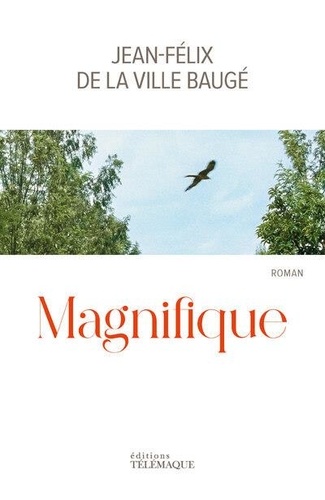
 Jean-Félix de La Ville Baugé has published four novels, including Dieu regardait ailleurs (Plon, 2013) and Votre fils (Plon, 2004). In the summer of 1994, he was sent by Solidarités International to the Gikongoro region of Rwanda. From 2004 to 2008, he headed Solidarités International in Darfur, then Médecins sans frontières in Chechnya. In 2009, he took charge of a newspaper in Moscow. In 2023, a new mission for MSF takes him to Iraq.
You must be logged in to post a comment.