
Invalid date
Security and Humanitarians: With INSO, Lessons from the Field
See more
Author :
Alain Boinet
Invalid date
Exclusive Interview with Pauline Chetcuti, President of VOICE, and Maria Groenewald, Director of VOICE

For our readers, could you remind us who VOICE is, its purpose, and its activities?
Maria: VOICE officially stands for Voluntary Organisations in Cooperation in Emergencies. We are the largest European network of humanitarian NGOs, promoting effective and efficient humanitarian action. We have existed for more than 30 years and bring together around 90 member organizations.
For me, VOICE is above all the voice of humanitarian NGOs in Europe and beyond. Through their international and local staff, these organizations do their utmost every day, often in highly volatile environments, to work alongside affected communities. VOICE is the main interlocutor for NGOs with the European Union on emergency response issues and promotes the values of its member organizations, which implement humanitarian action based on humanitarian principles across global crises. Unfortunately, the number of crises continues to grow as a result of natural disasters, climate change, and armed conflicts. Today, there are no fewer than 128 humanitarian crises worldwide.
At the last European Humanitarian Forum in Brussels, former European Commissioner for Humanitarian Aid Janez Lenarčič stated that the “humanitarian lifeboat” was at risk of sinking. How should we understand this statement?
Pauline: It is certainly a striking image: humanitarian action as a small lifeboat facing an ocean of needs and a storm of challenges. The boat is not sinking yet, but it is under tremendous pressure.
First, humanitarian needs continue to rise, with more than 305 million people requiring humanitarian assistance worldwide. Crises are multiplying, including many neglected crises that receive little media attention.
This image also highlights a profound imbalance: a lack of political willingness to prioritize humanitarian response over national economic interests. That lifeboat could be a ship if the political will existed. For example, global military expenditure reached US$2.443 trillion in 2023, while funding for the Global Humanitarian Overview 2023 amounted to US$21.8 billion. Military spending was therefore 112 times higher.
Despite these challenges, the humanitarian lifeboat continues to save lives, and we must collectively support it.

In your view, what are the main challenges facing humanitarian aid today?
Pauline: The challenges are immense and, unfortunately, far from new.
First, the overall trend of declining humanitarian funding is becoming increasingly alarming.
The United Nations estimates that US$47.4 billion will be needed to address growing global humanitarian needs. Yet the gap between available funding and humanitarian requirements continues to widen.
In 2024, because of insufficient funding, aid targeting objectives were reduced, resulting in a US$6 billion reduction in the global appeal compared to 2023 and more than 56 million fewer targeted beneficiaries. Even so, only 45.5% of the appeal was funded, suggesting that 2025 may be equally, if not more, difficult.
Traditional state donors are making drastic cuts to international aid budgets. Sweden and the Netherlands have announced reductions. Germany, Europe’s largest donor, plans to cut humanitarian spending from €2.23 billion in 2024 to €1.04 billion. France had already reduced its Official Development Assistance budget by nearly €800 million in 2024 and plans a further 18% decrease between 2024 and 2025. The European Union’s development assistance envelope is also shrinking, with €2 billion in cuts in 2024 and a planned 35% reduction in support to the world’s poorest countries between 2025 and 2027.
With fewer resources available, difficult choices must be made. Projects will be cancelled, not renewed, or underfunded, affecting both continuity and quality, to the detriment of affected populations.
Second, I am deeply concerned about the growing violations of international norms, particularly International Humanitarian Law (IHL).
Although political leaders frequently declare their support for the international rules-based order, IHL is routinely violated in many conflicts. Violations often occur with impunity, and even when international courts call for them to cease, their decisions frequently go unenforced.
Humanitarian workers have warned for decades about the erosion of respect for IHL. What we are witnessing today in Sudan, Ukraine, and Gaza reveals not only a failure to enforce international law but also troubling double standards, and sometimes attempts to portray violations as legitimate or lawful conduct.
Civilians are the primary victims of these violations, and attacks against humanitarian workers are increasing. According to the United Nations, 2024 became the deadliest year ever recorded for humanitarian personnel, largely due to the war in Gaza.
Most of these victims are local aid workers, whose proximity to conflict makes them especially vulnerable. This trend also reflects the rise of misinformation, which fuels distrust toward both UN agencies and humanitarian organizations.
Beyond operational challenges, humanitarian organizations are increasingly confronted by the rise of populist and far-right political movements that undermine the values of solidarity upon which humanitarian action depends. By generating fear of others and stigmatizing vulnerable populations, these narratives make access to affected communities more difficult and hinder our ability to carry out our missions.
Funding is a priority for VOICE and its members. What does the humanitarian budget outlook look like for 2025 and the years ahead?
Maria: Indeed, the European Union’s humanitarian budget is a major concern in our work. Many EU Member States have announced cuts to humanitarian funding, and this is a political signal that humanitarian organizations must take very seriously because these reductions will affect both our partners in the Global South and crisis-affected communities.
As mentioned earlier, the gap between humanitarian needs and available resources continues to grow. We welcome initiatives by the European Commission to broaden the donor base.
The European Humanitarian Forum, which will take place next May, is also an important opportunity to draw attention to the urgent funding crisis. VOICE will once again work actively before and during the Forum to raise awareness of our priorities, particularly the need for adequate humanitarian financing.
One of our key messages to Member States is that they should allocate 0.7% of their Gross National Income (GNI) to Official Development Assistance (ODA) by 2030, with at least 10% dedicated to humanitarian action.
We must continue ensuring that democratic parties in the European Parliament do not lose sight of the importance of humanitarian work. Ultimately, humanitarian engagement is a matter of political will. If the political will exists, funding will follow.
Advocacy has become a major component of humanitarian action today. Should advocacy evolve to become more effective while remaining consistent with the humanitarian principles of humanity, neutrality, impartiality, and independence?
Pauline: Advocacy is an integral part of humanitarian response. If we do not seek to change policies that harm affected populations and address the root causes of humanitarian crises, our actions risk being endlessly repeated without producing lasting positive impact.
We must ensure that we can continue informing decision-makers and encouraging them to act in favor of populations affected by crises. As we have already seen, civic space for NGOs is shrinking dramatically, both in the Global South and in Europe.
For example, European Commission guidance now states that EU grants may no longer be used by civil society organizations for advocacy activities directed at EU institutions. This makes the role of NGO networks such as VOICE even more important. We can amplify messages that some organizations are unable to convey because of restrictions in their mandates or capacities.
The ability of humanitarian NGOs to defend the rights of all people in need, without discrimination, remains essential. VOICE is committed to supporting its members in this effort.

What are VOICE’s strategic priorities during the new European Commission’s mandate?
Maria: In VOICE’s new 2024-2029 Strategic Plan, we identified three main strategic objectives.
First, defending humanitarian principles and International Humanitarian Law. In increasingly complex environments, protecting humanitarian space is essential. The EU and its Member States must lead by example by basing their decisions on humanitarian principles and using their influence to promote respect for IHL globally.
Second, securing adequate and quality funding for European humanitarian programmes remains a central priority. One of our strengths lies in our ability to mobilize support among EU institutions, Member States, humanitarian actors, and civil society.
Third, the growing complexity and protracted nature of crises require additional resources to address root causes and strengthen resilience to climate change. Humanitarian actors have long warned that they cannot be the only solution. Better coordination between DG ECHO, DG INTPA, the European External Action Service (EEAS), and Member States is essential.
Our strategy also emphasizes VOICE’s role as a collective coordination and reflection space for European NGOs. We provide a platform for sharing expertise and knowledge, helping to build evidence-based advocacy.
Some observers fear that the broad mandate of the new Commissioner, Hadja Lahbib, may come at the expense of humanitarian issues. What is your assessment?
Pauline: Such concerns are understandable given the scale of Commissioner Lahbib’s responsibilities. As Commissioner for Preparedness, Crisis Management and Equality, she has numerous duties beyond emergency response coordination and humanitarian diplomacy.
At the launch of the Global Humanitarian Overview in December 2024, Commissioner Lahbib emphasized the importance of respecting International Humanitarian Law and addressing the humanitarian funding gap. She also expressed her commitment to working with global partners to strengthen the humanitarian system and address current challenges.
These statements demonstrate her genuine interest in humanitarian issues and confirm that she is an important ally in defending populations affected by crises.
VOICE will continue working to keep humanitarian challenges high on Commissioner Lahbib’s agenda. We will also continue supporting and encouraging DG ECHO to ensure that humanitarian priorities remain balanced with her broader portfolio. The coming months will be decisive in assessing the impact of her expanded mandate, and the next European Humanitarian Forum will provide an important first opportunity to take stock.
How would you like to conclude this interview?
Pauline: It is difficult to begin 2025 on an optimistic note given the immense challenges facing the humanitarian sector. Yet the realities experienced by people in Sudan, the Democratic Republic of the Congo, and Gaza compel us to remain active, vigilant, and committed to defending our principles and values more strongly than ever.
I welcome the announcement of a ceasefire in Gaza and hope that populations who have endured unimaginable suffering for more than a year will finally gain access to the assistance they need.
VOICE and all its members are determined to work together to overcome obstacles and create lasting positive change. The commitment and coordination of humanitarian actors will be crucial in ensuring a response equal to today’s challenges in an increasingly hostile geopolitical environment. Together, we can overcome these difficulties by upholding our common values of humanity and respect for international law.
Maria: I fully agree with Pauline. Together, we are stronger. At a time when civic space is shrinking dramatically and non-democratic political forces seek to silence civil society voices, the voice of VOICE is more important than ever.

Pauline Chetcuti
Pauline Chetcuti has been—since June 2024—the President of VOICE. Pauline Chetcuti is also Head of Humanitarian Campaigns and Advocacy for Oxfam International. A lawyer specialized in international humanitarian law and human rights, she has solid experience within UN agencies and NGOs in contexts such as Palestine, Afghanistan, the DRC and Myanmar. She provides strategic leadership on global campaigns and policies related to the protection of civilians, fragility and the impact of climate change on vulnerable populations. Author of several publications on humanitarian principles, hunger and the link between climate and humanitarian action, she contributes actively to the international debate. An expert in network management, she strengthens humanitarian partnerships and represents Oxfam in high-level forums. Guided by feminist leadership, she values diversity, inclusion and the expression of the voices of her team and partners.
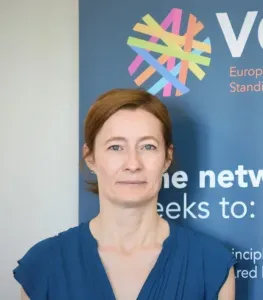
Maria Groenewald
With over 15 years of experience in the NGO sector, Maria Groenewald has developed strong advocacy and project management skills in both the humanitarian and development fields. After studying political science, communication science and sociology in Germany and France, Maria started her career working for Johanniter International Assistance, where she gained extensive field experience in Africa. Maria then joined Plan International Germany, where she held various positions for more than ten years, including Head of Humanitarian and Development Programs in Asia.
In the four years prior to joining VOICE, Maria was based in Brussels as Senior Resource Mobilization Manager at Plan International Germany with a focus on funding and relations with DG ECHO and DG DEVCO (now DG INTPA).
Specialized in humanitarian and development programming, nexus, activity development, resource mobilization, programming related to children’s rights, humanitarian partnership (in particular with DG ECHO) and the Grand Bargain, Maria joined the VOICE secretariat team in February 2021 as Program Coordinator. She became Acting Director in July 2021, before being appointed as the new VOICE Director in November 2021.
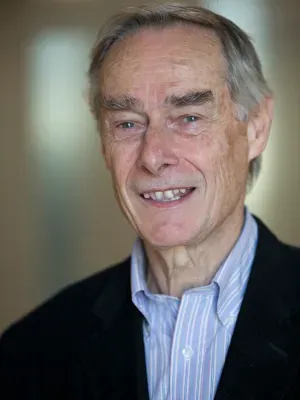
Alain Boinet
Founder of the association Solidarités International and of the website Défis Humanitaires, Alain Boinet has carried out numerous missions in countries in crisis since 1980. He is also an honorary member of the Board of Directors of Solidarités International, a member of the Humanitarian Dialogue Group at the Ministry of Europe and Foreign Affairs and of its Crisis and Support Centre. He is a director of the French Water Partnership (PFE), the Véolia Foundation and the Think Tank (re)sources.