The threats ahead, and the responses to face them!
Author :
Alain Boinet
10/06/2026

After the Trump tsunami of January 2025 and the rapid fall in humanitarian and development budgets around the world, the question we now face is whether we are in a lasting phase of stabilization after the storm, or whether we are heading toward new shocks. By observing trends and weak signals, analyzing them and anticipating how they will develop, we can see more clearly and prepare in advance, rather than suffering another shock in the heat of the moment.
So where do we stand?
Geopolitically, the war in Ukraine is intensifying ahead of winter and spreading deep into Russia through the destruction of critical energy infrastructure, which is dealing severe blows to the Russian economy. Sergey Lavrov has warned us: there will be no peace talks with Ukraine, and Europe is denounced as a warmonger just as the Russians multiply hostile acts directed at Riga, Warsaw, London, Berlin, Paris and elsewhere!
The war in the Strait of Hormuz between the United States and Iran is dragging on with no foreseeable end. It now extends to the Bab el-Mandeb Strait in the Red Sea with the Houthis, and is forging new strategic alliances in the region while causing a global surge in energy costs that fuels discontent and protest in every country.
The influence of Silicon Valley tech companies is spreading around the world through AI, at the risk of an unchecked imperial domination and of letting loose weapons of mass destruction that humans can no longer control.
Yet there is also good news. Pope Leo XIV says he is not afraid of the Trump administration and has published the encyclical Magnifica humanitas (magnificent humanity), which seeks to place AI exclusively at the service of humankind.
Other advances are notable too: gene therapies, renewable energy, the decline of hunger and access to drinking water worldwide, education, the fight against desertification, growing awareness of the risks of global warming, the vitality of volunteering in associations, and so many others.
But is that enough on the scales that weigh peace against war, solidarity against selfishness, freedom against dictatorship, development against Africa’s runaway demographic growth, and so many other existential challenges?
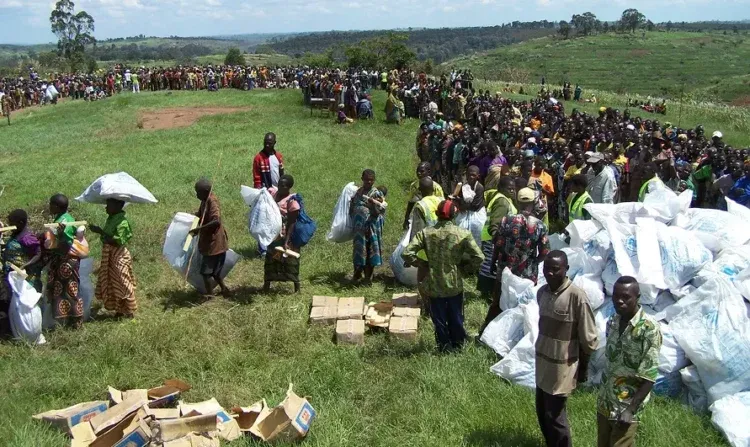
Humanitarian and development aid is still threatened by a continuing decline in its budgetary resources. In France, the 2027 Finance Bill provides for a further cut of €1.85 billion in international aid. With the weakening of the UN looking lasting, OCHA and Tom Fletcher are condemned to daily prioritization of the people to be rescued, and to forgetting the others, who are the most numerous!
The European Union’s draft budget for 2028-2034, the Multiannual Financial Framework, which could be a source of hope, is itself the subject of tight negotiations. The European Commission has presented a sharply increased budget of €2,000 billion over seven years, including €25 billion for humanitarian aid. But five Heads of State and Government (Denmark, Germany, the Netherlands, Austria, Finland) have just signed an op-ed declaring: « This is simply not realistic. » They call for a reduction of several hundred billion euros and conclude: « The world around us has changed, our priorities have too, and our common budget must change as well. »
Priorities and budgets will also be redirected depending on the results of upcoming elections in various EU member states, particularly France and Germany.
The world is a puzzle of nation-states in which the primacy of the Western world is being challenged by resurgent empires and by countries jealous of their sovereignty that aspire to take its place or, more simply, to improve their own. This deep shift of the geopolitical tectonic plates is provoking vast movements of public opinion anxious about their own future, especially in democratic countries.
We know there is no end of history in which liberal democracy would ultimately triumph, as the philosopher Francis Fukuyama believed. The trend today is toward competition, confrontation, and power politics, and therefore toward security and defense for each and for all. Nobody wants to lose and everybody wants to win! But are we heading toward Samuel Huntington’s « Clash of Civilizations »? Between the two, where will the cursor settle?
In this fast-changing world, Défis Humanitaires has decided to rethink the conditions of its mission in order to fulfill it better. This project consists of broadening and deepening the editorial line, equipping ourselves with more effective tools to optimize the online magazine, and finally inviting you to take an active part in it.

The new layout you are discovering today with issue 117 is a milestone for which your support is essential: your donation to Défis Humanitaires (make a donation). You will receive a tax receipt allowing you to deduct 66% of the amount from your taxes.
This editorial is an invitation to assess and define together the dangers that threaten us and the responses to face them: alliance, public opinion, pooling of resources, localization, innovation, budget sanctuarization. In that spirit, we invite you to attend the conference-debate on Thursday, November 5th at 7 p.m. at 184 boulevard Saint-Germain, Paris 6th, with experts and practitioners of humanitarian aid and geopolitics. You will find more information here.
In the meantime, we will see what answers the 7th National Humanitarian Conference (CNH), organized on Tuesday, Octobre 5th in Paris by the Crisis and Support Centre (CDCS) of the Ministry for Europe and Foreign Affairs together with humanitarian actors, will have brought.
Your donation is both precious moral support for us and vital financial help for our work, thank you (HelloAsso).
Your presence on Thursday, November 5th at this conference-debate will strengthen our common humanitarian fight, in which I believe national solidarity and international aid are compatible and complementary in responding better to the dangers that threaten us. So how could we not count on you? Thank you.
Alain Boinet
President of Défis Humanitaires
Thank you for your support (make a donation).
Biography
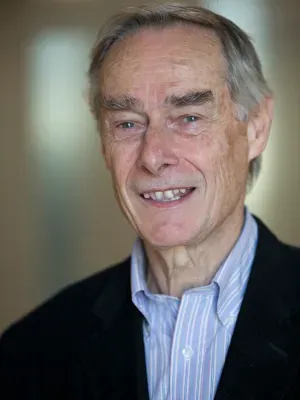
Alain Boinet
Founder of the association Solidarités International and of the website Défis Humanitaires, Alain Boinet has carried out numerous missions in countries in crisis since 1980. He is also an honorary member of the Board of Directors of Solidarités International, a member of the Humanitarian Dialogue Group at the Ministry of Europe and Foreign Affairs and of its Crisis and Support Centre. He is a director of the French Water Partnership (PFE), the Véolia Foundation and the Think Tank (re)sources.