
09/02/2026
Links that unite
Alain Boinet talks to us about the latest developments in Narva, Estonia, ahead of the National Humanitarian Conference (CNH).
See more
Author :
Antoine Vaccaro
10/01/2025
A Silent but Massive Dynamic

Saint Martin sharing his cloak: a symbol of generosity and solidarity. Today, this image invites us to reflect on how the transmission of heritage can serve the collective interest.
For the past twenty years, France has been undergoing a quiet yet significant transformation: that of wealth transmission. Between 2000 and 2020, it is estimated that between €2,600 billion and €3,000 billion have been transferred through inheritances and donations.
In 2022, according to data from France Générosités, charitable bequests and donations amounted to €1.271 billion, representing just under 0.7% of total transmissions for that year.
Hypothesis: If this 0.7% ratio remained relatively stable over the past two decades, then bequests and donations to associations, foundations, and churches would have represented approximately €20 billion over this period. While this is a substantial sum in absolute terms, it remains marginal when compared to the overall volume of wealth transmitted.
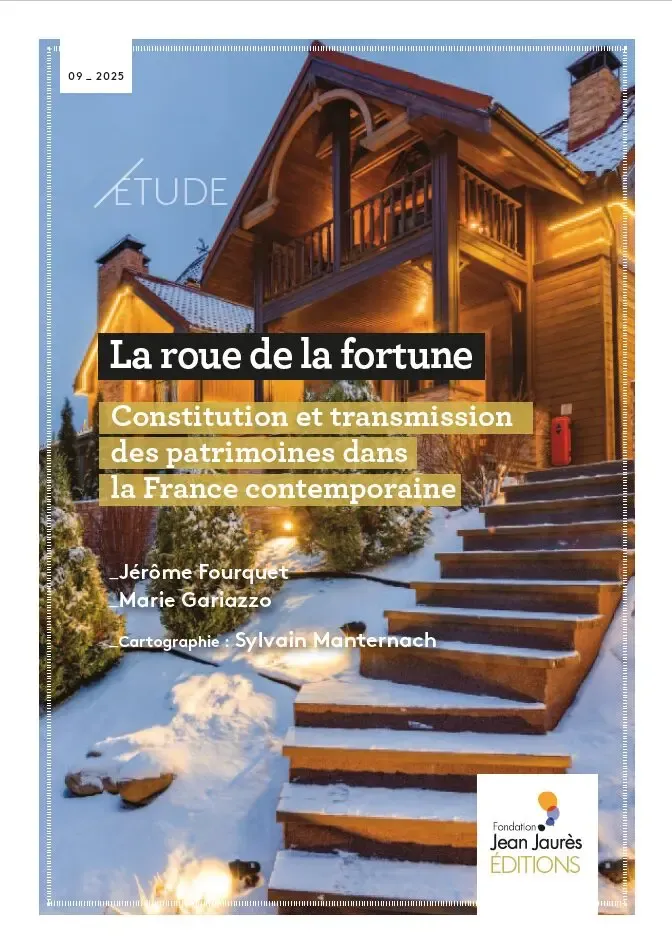
Recent work by Jérôme Fourquet and Marie Gariazzo Sylvain Manternach, published by the Jean-Jaurès Foundation, signals an unprecedented « great transmission » event: nearly €9,000 billion in wealth is expected to change hands by 2040, primarily from baby boomers to their heirs. This wealth pool has no equivalent in the contemporary history of our country.
If the 0.7% share remains unchanged, this would equate to approximately €63 billion for associations and foundations over the next twenty years. In other words, a tripling compared to the previous twenty years. This is significant, but still very modest relative to the total wealth being transmitted.
We attempted the projection exercise, undoubtedly a risky endeavor, but a necessary one to visualize the stakes. The chart below presents a plausible distribution of this transmission to organizations with a public interest, considering demographic dynamics: 30% of the wealth will be transmitted between 2022 and 2031, and 70% between 2032 and 2041. This non-linear assumption reflects the inevitable acceleration of deaths among the baby boom generation and the concentration of wealth over the next two decades.
This scenario leads to a gradual increase in flows, from €1.271 billion for organizations of general interest in 2022 to over €2 billion per year at the start of the 2030s, and then exceeding €4 billion by 2040.

This projection paints a contrasted landscape. On one side, a predictable and rapidly growing resource. On the other, a relatively small share in relation to the total wealth transmitted. The challenge for public interest actors is therefore twofold: to capture their share of this transmission and, more importantly, to convince people that a bequest is not a secondary gesture, but a true societal choice.
Because beyond the numbers, the question is existential: how much of our collective wealth do we want to dedicate to the common future? Humanitarian, healthcare, social, and environmental challenges require greater funding. Bequests could become one of the major levers for this financing if an effort is made in education, trust, and recognition.
To achieve this, several conditions are necessary:
The « great transmission » is not just a demographic phenomenon. It is a cultural and political event, in the noble sense of the word: the allocation of our collective wealth between private interests and the common good.
By 2040, it will be too late to realize that the opportunity was missed. Action must be taken today to ensure that the share of public interest in inheritances is not doomed to remain marginal. Making bequests a reflex is preparing a future where our solidarities will meet the scale of the challenges.
[1] https://www.francegenerosites.org/chiffres-cles/
Nous vous invitons à découvrir les autres articles de cette édition n°105 :

Antoine Vaccaro
He holds a Ph.D. in organizational science. After a career with major nongovernmental organizations and communications firms—including Fondation de France, Médecins du Monde, and TBWA—he now serves as president of CerPhi and Force for Good. He is a board member of various associations and foundations. Co-founder of several professional organizations: the French Association of Fundraisers, the Committee for the Code of Ethics for Organizations Relying on Public Generosity, Euconsult, and the ESSEC Chair in Philanthropy. Investor at Heoh, Qu’est-ce qui tourne?, and My Quick Win. He has published various books and articles on philanthropy and fundraising.
09/02/2026
Alain Boinet talks to us about the latest developments in Narva, Estonia, ahead of the National Humanitarian Conference (CNH).
See more

09/02/2026
Cyprien Fabre explains how crises arise from the gradual erosion of societies' resilience and calls for international cooperation that strengthens our capacity to absorb shocks.
See more

09/02/2026
Antoine Vaccaro advocates for a humanitarian lottery and explains the benefits of this type of fundraising initiative.
See more

09/02/2026
Rethinking the Role of Afghan Women in Solidarités International’s WASH Programs.
See more